
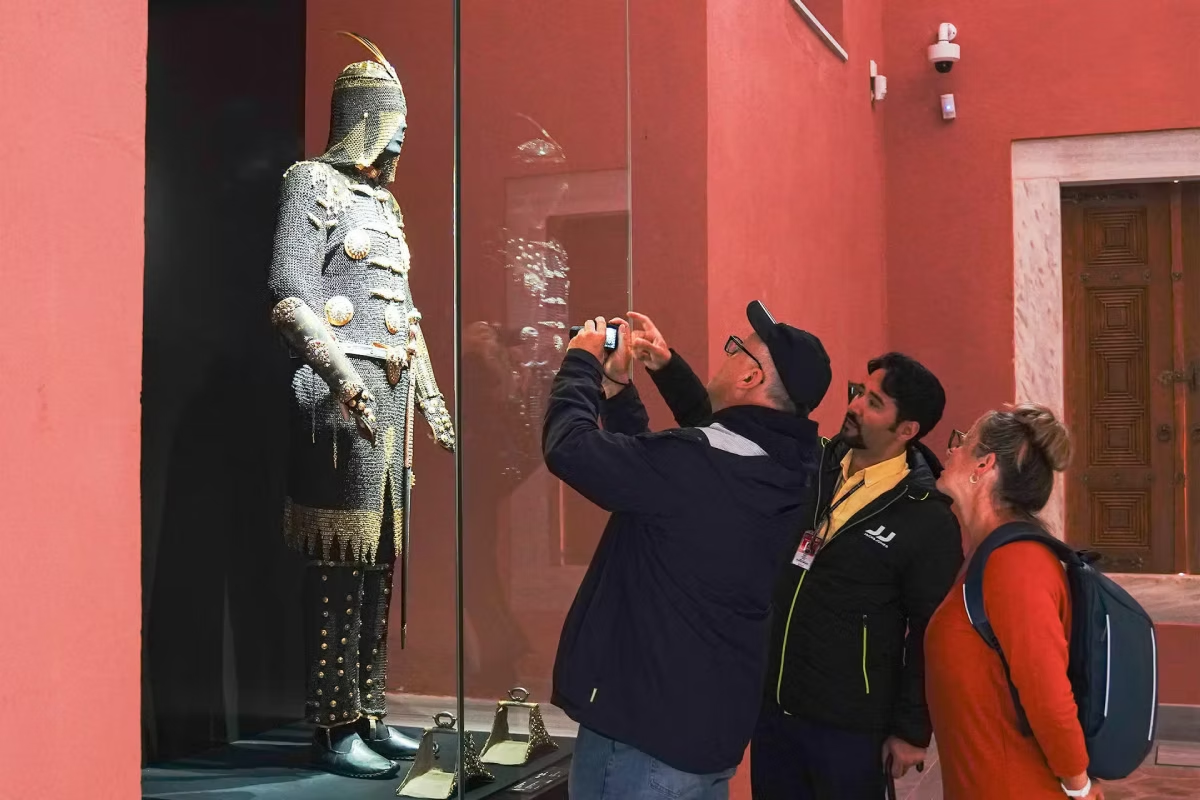
The Armory & Weapons Hall at Topkapi Palace

The Armory (Silah Hazinesi) is located in the Second Courtyard and houses one of the world’s great collections of Ottoman weapons and armour — swords, daggers, bows, shields, and ceremonial arms spanning five centuries. Note that parts of the Armory were closed for renovation as of 2024 — check current status on arrival. Entry is included in the standard palace ticket.
The Topkapi Palace Armory is one of the largest and most important collections of Islamic arms and armour in the world. It documents the military history of the Ottoman Empire across five centuries — from the early campaigns of Mehmed II that established Ottoman dominance over the eastern Mediterranean, to the ceremonial weapons of the late empire’s final sultans — through thousands of objects that range from functional battlefield equipment to objects of extraordinary artistic refinement.
The Collection
The Armory collection spans the full arc of Ottoman military history and contains objects at every level of the social hierarchy — from the jewelled ceremonial swords of the sultans to the functional bows and quivers of Janissary soldiers. The most significant categories are:
Swords and Daggers — The sword collection is one of the finest in any museum in the world, containing examples from across the Islamic world as well as Ottoman court production. The sword of Sultan Suleiman the Magnificent — displayed separately in the Imperial Treasury — is the most famous individual piece, but the Armory contains hundreds of other historically significant blades. Ottoman swordsmanship and blade-making reached extraordinary levels of technical refinement in the 15th and 16th centuries, and the collection documents this tradition comprehensively.
Bows, Arrows & Archery Equipment — The Ottoman Empire had a profound archery tradition — the Janissaries and the Ottoman cavalry were among the most skilled archers in the medieval and early modern world. The Armory contains a large collection of composite bows, quivers, archery rings, and associated equipment, including bows attributed to specific sultans and exceptional examples of Central Asian archery craftsmanship that influenced Ottoman military practice.
Shields — The shield collection includes examples in steel, leather, and cane, many decorated with gold, silver, and precious stones. Ottoman shields combined functional protection with elaborate surface decoration — some are as much works of art as military equipment, their surfaces covered with intricate geometric and floral designs in niello, gilding, and enamel.
Armour — The collection includes mail, plate, and mixed armour from across the Ottoman centuries, as well as armour captured from defeated enemies — Safavid Persian armour from the Battle of Chaldiran (1514) and European armour from various campaigns. The juxtaposition of Ottoman and non-Ottoman armour in the same collection provides a remarkable comparative view of military technology across the early modern world.
Firearms — The Armory also contains a collection of Ottoman firearms from the 16th century onwards — muskets, pistols, and ornate presentation firearms — documenting the Ottoman adoption and adaptation of gunpowder weapons, which played a decisive role in the empire’s military expansion.
Ceremonial and Diplomatic Weapons — A significant portion of the collection consists of weapons that were never intended for battlefield use — gifts between rulers, presentation pieces from the palace workshops, and ceremonial arms used in parades and court rituals. These objects represent the pinnacle of Ottoman metalworking and are among the most technically accomplished pieces in the collection.
Current Status — Renovation Notice
Parts of the Armory were closed for renovation as of 2024. The renovation programme at Topkapi Palace is ongoing and affects different sections at different times. Before making the Armory a primary focus of your visit, confirm its current status on arrival at the palace or by contacting the museum directly at +90 (212) 512 0480.
If the Armory is partially or fully closed during your visit, the weapons and armour displayed in the Imperial Treasury’s first room — which includes some of the finest individual pieces from the overall collection — remain accessible as part of the standard Treasury visit.
Visitor Tips
Check current opening status before your visit. Renovation closures at Topkapi are common and not always reflected in advance online information.
Combine with the Imperial Treasury. The finest ceremonial weapons from the overall palace collection are split between the Armory and the Treasury’s first room. Visiting both gives you the fullest picture of Ottoman military craftsmanship at the highest level. See our Imperial Treasury guide for details.
Time needed: 20–30 minutes for the currently open sections. A full visit to the complete Armory — when all sections are open — warrants 35–45 minutes.
Frequently Asked Questions
Is the Armory open at Topkapi Palace?
Parts of the Armory were closed for renovation as of 2024. Check current status on arrival or contact the palace before your visit. The weapons displays in the Imperial Treasury’s first room are accessible regardless of Armory closure status.
What weapons are in the Topkapi Palace Armory?
The Armory contains swords, daggers, bows, arrows, shields, armour, and firearms spanning five centuries of Ottoman military history, as well as captured enemy weapons and ceremonial arms of extraordinary craftsmanship.
Is the Topkapi Dagger in the Armory?
No. The Topkapi Dagger is displayed in the fourth room of the Imperial Treasury, not in the Armory. See our Imperial Treasury guide for details.
