
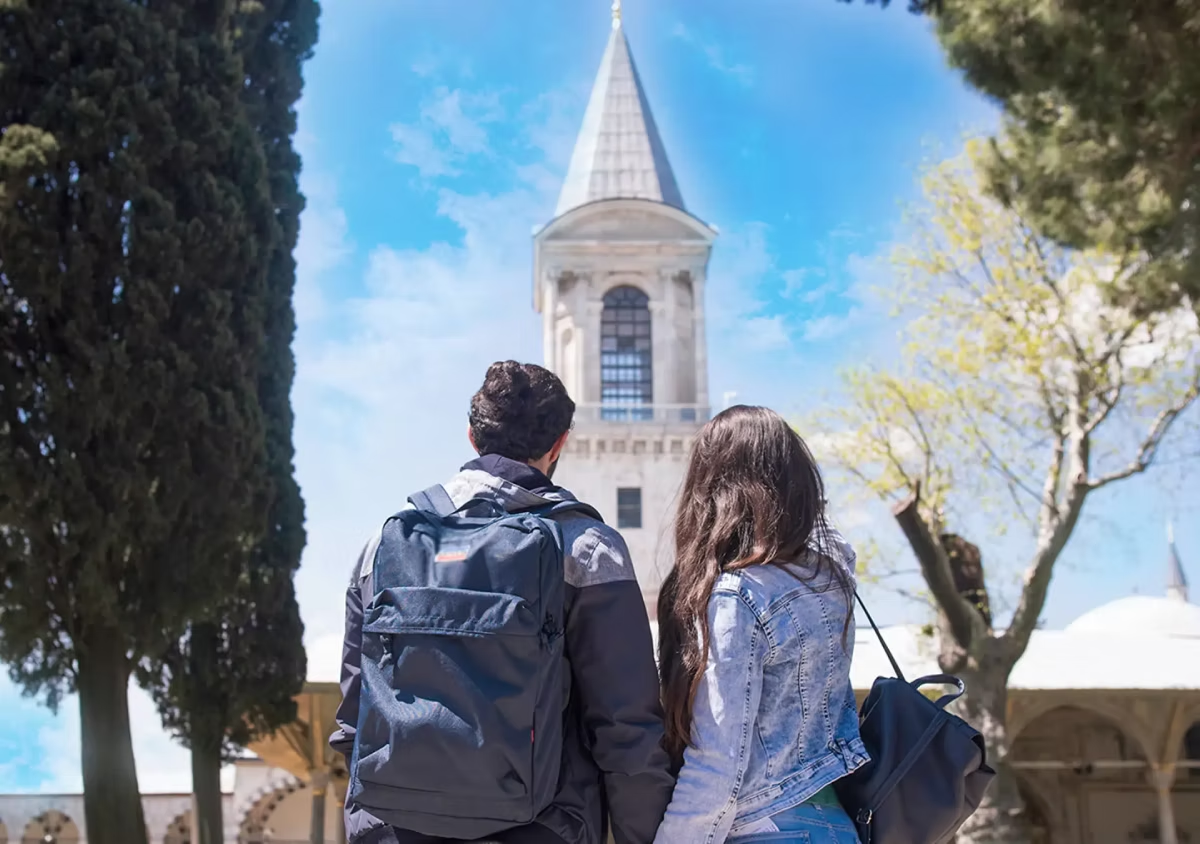
Topkapi Palace: Tips & Things to Know Before You Visit

Arrive at 09:00 to beat the queues, download your audio guide before entering (no Wi-Fi inside), wear flat comfortable shoes, and head to the Harem first — it gets busier as the day goes on. The palace is closed every Tuesday. Security is airport-style and mandatory for all visitors regardless of ticket type.
Topkapi Palace is one of the most rewarding visits in Istanbul — but it is also one where a little preparation makes an enormous difference. The palace is larger and more complex than most visitors expect, the layout is non-linear and easy to get lost in, and a handful of logistical surprises — the mandatory security queue, the absence of Wi-Fi, the ticket office cutoff — catch first-timers off guard every day.
These tips are drawn from the most common visitor questions and feedback about what they wish they had known before arriving. Read them before you go, and your visit will be significantly smoother.
Before You Arrive
1. Check it’s not Tuesday. Topkapi Palace is closed every Tuesday without exception. It is also closed on the first day of Ramadan Bayram and the first day of Kurban Bayramı. These closures catch more visitors off guard than you might think — confirm the day before you travel. See our opening hours guide for the full closure calendar.
2. Book tickets in advance from April to October. The gate ticket queue during peak season can take 45–60 minutes on its own — before you even reach the security check. Buying a skip-the-line ticket online avoids the ticket office entirely and locks in your entry time slot. Walk-up tickets are perfectly fine in winter (November–March) when queues are short, but in summer they are a genuine waste of time.
3. Download your audio guide before leaving your hotel. There is no Wi-Fi anywhere inside Topkapi Palace, and mobile data reception is unreliable inside the thick-walled galleries. If your ticket includes the app-based audio guide — available in up to 25 languages — download it at your accommodation and set it to offline mode before you depart. See our audio guide review for the setup instructions.
4. Wear flat, comfortable shoes. This is not optional advice. The palace grounds cover a vast area of uneven cobblestone surfaces, the path between courtyards involves long stretches of outdoor walking, and the Harem alone involves considerable distances on foot through narrow corridors and steep steps. Inappropriate footwear directly reduces how long you can comfortably explore.
5. Bring water and a light layer. In summer, the outdoor courtyards can be extremely hot with limited shade between sections. In winter, the journey between indoor galleries is entirely outdoors. A water bottle and a jacket for cooler months will make the visit more comfortable regardless of season.
6. Have a passport or ID ready for children. Children under 6 enter free, but must present a valid passport or ID document at the gate to verify age. This applies to all nationalities. Without a document, the standard adult ticket price applies. See our free and discounted entry guide for full eligibility details.
At the Entrance
7. Expect a mandatory security check — for everyone. Every visitor passes through an airport-style security scanner at the Imperial Gate, regardless of ticket type. Pre-booked tickets do not bypass this queue. During peak season (July–August), the security check alone can take 20–40 minutes. Build this into your arrival plan and do not assume a skip-the-line ticket bypasses security — it bypasses the ticket office queue, not the security scanner.
8. The alternative Gülhane entrance is worth knowing about. Most visitors enter through the main Imperial Gate on Babıhümayun Caddesi. A lesser-known alternative is to enter via the Archaeology Museum access from Gülhane Park on the northern side of the palace grounds. This route is a slightly longer walk but sometimes has a shorter security queue during busy mornings. The nearest tram stop for this entrance is Gülhane on the T1 line.
9. Large bags are not a problem, but be prepared. All bags pass through the security scanner. There are no locker facilities inside the palace — you carry everything with you throughout your visit. If you are travelling with a large rucksack, this is worth considering before deciding what to bring.
Navigating the Palace
10. Orient yourself before you start walking. Topkapi Palace is not laid out like a traditional European palace with a single building and obvious rooms. It is a sprawling compound of four successive courtyards, each leading to the next, with separate pavilions, galleries, and the Harem accessed through different gates. First-timers frequently wander into the Second Courtyard without a plan and spend too much time in minor sections before running out of energy or time for the Treasury and Harem. Download a palace map or pick up the free printed map at the entrance before you set off. Our complete guide to what’s inside has a full orientation by courtyard.
11. Go to the Harem first. The Harem is the busiest section of the palace and the one most likely to have queues building as the day progresses. Heading there immediately after entering the Second Courtyard — before visiting the Treasury or Sacred Relics Room — gives you the best chance of exploring it without bottlenecks. Allow at least 45–60 minutes inside.
12. Do not skip the Sacred Relics Room. Many visitors prioritise the Treasury and the Harem and give the Sacred Relics Room a cursory walk-through. This is a mistake. The Sacred Relics Room — housing the mantle, sword, and personal effects of the Prophet Muhammad, as well as relics of the earliest caliphs — is one of the most significant Islamic heritage collections anywhere in the world. It is visited by millions of Muslim pilgrims each year and is a deeply moving space for visitors of all backgrounds. Allow at least 20–30 minutes. See our Sacred Relics Room guide for what to expect inside.
13. The Fourth Courtyard views are worth the walk. The long walk through the Third Courtyard and into the Fourth Courtyard — the innermost section of the palace — rewards you with some of the finest views in all of Istanbul. The terraced gardens overlook the Bosphorus Strait, the Golden Horn, and on clear days the Asian side of the city. Many visitors run out of time or energy before reaching this point. Do not let that happen — the Bosphorus views from the Fourth Courtyard terraces are a highlight of the entire visit.
14. Hagia Irene requires a separate ticket. Hagia Irene — one of the oldest surviving Byzantine churches in Istanbul — is located within the First Courtyard of Topkapi Palace. It is not included in the standard palace ticket and requires a separate entry fee. If you plan to visit it, buy the combined ticket in advance or at the gate before entering the main palace grounds.
Photography & Etiquette
15. Photography is allowed in most areas — but not all. Photography is permitted throughout the outdoor courtyards and in many of the indoor galleries. However, flash photography and tripods are prohibited in all indoor exhibition spaces. Certain rooms — including parts of the Sacred Relics Room — prohibit photography entirely. Signage is generally clear at each entrance. See our full photography and dress code guide for a room-by-room breakdown.
16. Smoking is completely prohibited. This includes electronic cigarettes and vaping devices. The ban applies to all areas of the palace — indoor and outdoor — and has been enforced by Turkish law since 1996. Palace staff take this seriously and will ask you to leave the premises if caught. Do not attempt to smoke in the gardens.
17. There is no strict dress code, but respectful attire is appropriate. Unlike the nearby Blue Mosque, Topkapi Palace does not require visitors to cover their heads or remove their shoes. Smart casual is perfectly appropriate. That said, the palace is a place of significant historical and religious importance — particularly the Sacred Relics Room — and overly casual or revealing attire is out of place. See our dress code guide for full details.
Practical On-the-Day Tips
18. The ticket office closes 30 minutes before last entry. In summer (April–October), last entry is 17:30, so the ticket office closes at 17:00. In winter, last entry is 16:30 and the ticket office closes at 16:00. If you are buying at the gate, arrive before these cutoff times. If you have a pre-booked ticket, aim to clear security well before last entry — the queue can still cost you time. See our opening hours guide for the full schedule.
19. There is a café inside the palace. The Konyalı Restaurant and café, located in the Fourth Courtyard, is one of Istanbul’s most scenically positioned dining spots — it overlooks the Bosphorus and the Sea of Marmara. It is a good option for a mid-visit break. Prices are predictably elevated for a palace setting, but the view is worth it. See our dining and facilities guide for more details.
20. Consider a guided tour for your first visit. The palace is 560 years old, built by a succession of sultans across four centuries, and contains layers of Ottoman political, cultural, and Islamic history that are easy to miss if you are exploring independently. A knowledgeable guide transforms the visit — the Harem in particular goes from a beautiful but bewildering maze of rooms to a vivid picture of Ottoman court life, power, and intrigue. See our guided tour options for what is available, or our audio guide vs guided tour comparison if you are undecided.
Frequently Asked Questions
Is Topkapi Palace easy to navigate without a guide?
It is navigable independently, but it is not intuitive. The non-linear courtyard layout, the separate entrance to the Harem, and the distance between sections mean that a plan and a map (or audio guide) are essential for a first visit. Many first-timers who visit independently wish in retrospect that they had taken a guided tour for at least the first hour.
Can I re-enter Topkapi Palace if I leave?
No. Once you exit the palace grounds, your ticket is no longer valid for re-entry. Plan your visit as a single continuous session.
Is the palace suitable for elderly visitors or those with limited mobility?
Partially. The main entrance has ramp access, and many courtyard areas are accessible, but the grounds involve significant cobblestone walking and some areas have steps without ramp alternatives. See our dedicated accessibility guide for a detailed breakdown of which sections are accessible and how to plan a comfortable visit.
What happens if it rains?
Much of the palace visit involves outdoor walking between courtyards. A light waterproof layer is a good idea year-round. The indoor galleries — the Harem, Treasury, Sacred Relics Room, and kitchen collections — provide shelter, but the journey between them is outdoors. The palace does not close due to rain.
