
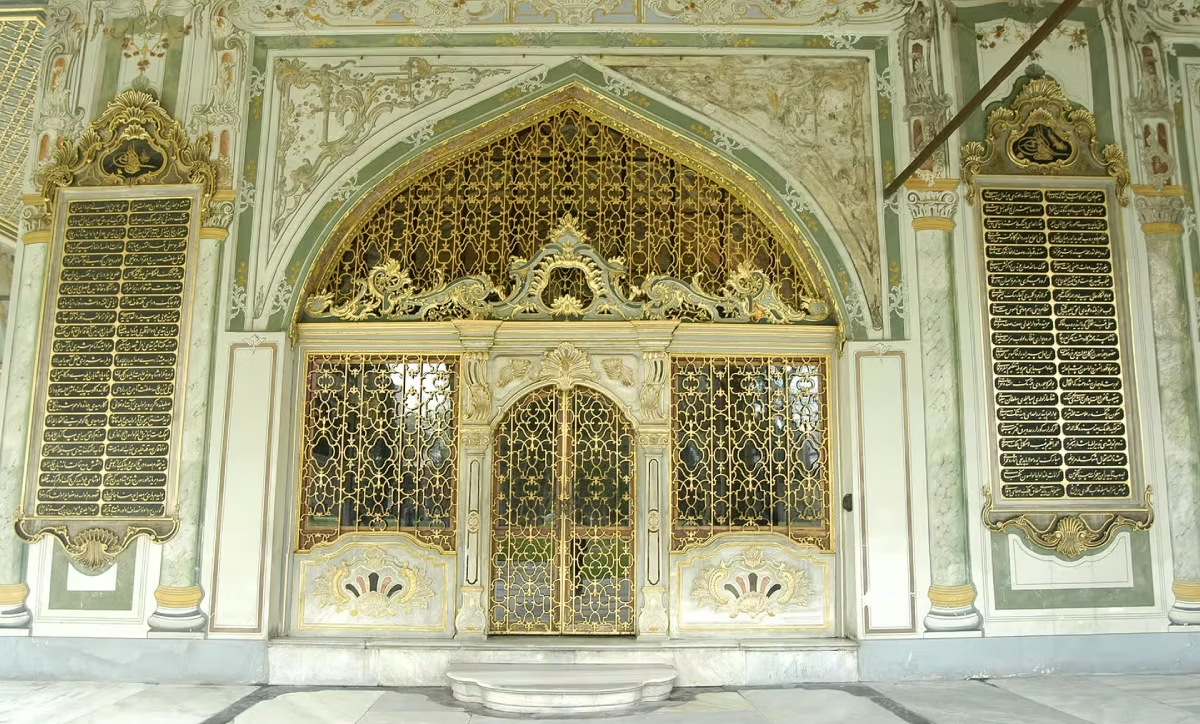
The Sacred Relics Room at Topkapi Palace
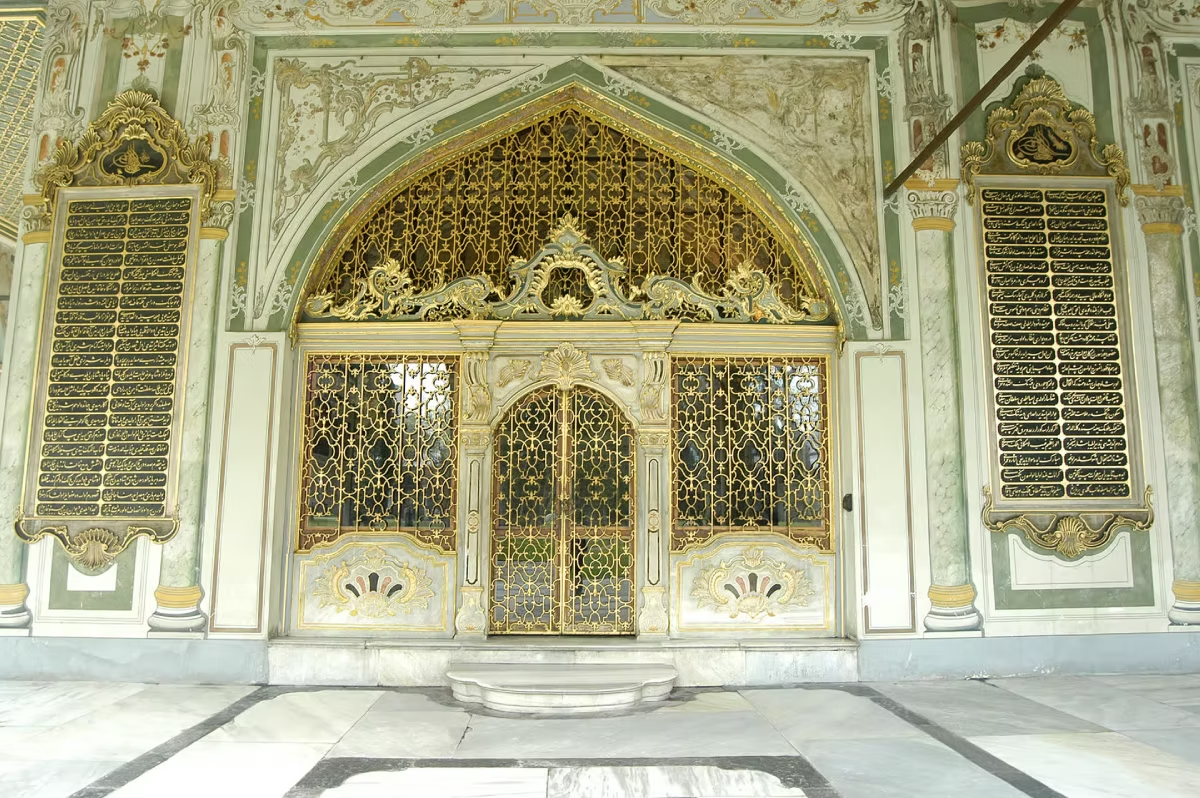
The Sacred Relics Room (Kutsal Emanetler Odası) is located in the Third Courtyard and houses one of the most significant collections of Islamic heritage in the world — including the mantle, sword, and personal seal of the Prophet Muhammad. Verses from the Quran are recited continuously inside. Photography is restricted in the inner chamber. Allow 20–30 minutes. Entry is included in the standard palace ticket.
Of all the sections of Topkapi Palace, the Sacred Relics Room stands apart. Where the Imperial Treasury dazzles with material wealth and the Harem fascinates with political intrigue, the Sacred Relics Room operates at a different register entirely — one of deep religious significance, solemn atmosphere, and historical weight that transcends the Ottoman Empire that preserved these objects and extends back to the earliest centuries of Islam.
For Muslim visitors, this room is among the most important pilgrimage destinations in the world — a space where objects touched by or associated with the Prophet Muhammad can be seen, and where prayers are offered in continuous recitation. For visitors of all backgrounds, it is the most quietly profound section of the palace and one that rewards unhurried, respectful attention.
How the Relics Came to Istanbul
The Sacred Relics came to Topkapi Palace in 1517 following Sultan Selim I’s conquest of Egypt and the defeat of the Mamluk Sultanate. Selim assumed the title of Caliph — the successor to the Prophet as leader of the Islamic world — and transferred the symbols of that authority to Istanbul, including the sacred relics that had been held by the Abbasid Caliphate in Cairo.
From 1517 until the abolition of the Ottoman Caliphate in 1924 — over four centuries — the Ottoman sultans held custodianship of the most sacred objects in Sunni Islam. The Sacred Relics Room was maintained as an active shrine throughout this period, with hafizs (memorisers of the Quran) reciting continuously in the inner chamber. This practice has never stopped — the recitation continues to this day, maintained by a team of hafizs who take turns around the clock.
What the Collection Contains
The Sacred Relics Room houses an extraordinary range of objects associated with the Prophet Muhammad, members of his family, and the earliest caliphs. The most significant items are:
The Mantle of the Prophet (Hırka-i Saadet) — the most sacred object in the collection, a woollen cloak believed to have been given by the Prophet Muhammad to the poet Ka’b ibn Zuhayr and passed down through the generations until it entered the Ottoman collection. The mantle is kept in a gold case and is not directly visible to visitors — the case itself is the object of veneration. It is brought out once a year on the 15th night of Ramadan for special ceremonies.
The Sword of the Prophet (Seyf-i Nebi) — one of several swords associated with the Prophet, displayed in the collection alongside swords of the early caliphs. The attribution of specific swords to the Prophet is a matter of ongoing scholarly discussion, but the objects themselves are of extraordinary historical and religious significance.
The Personal Seal of the Prophet (Mühür-i Nebi) — a carnelian ring seal used by the Prophet Muhammad for official correspondence. It bears the inscription “Muhammad Rasul Allah” (Muhammad, Messenger of God) and is among the most directly personal objects in the collection.
Strands of the Prophet’s Beard (Sakal-ı Şerif) — several hairs from the beard of the Prophet Muhammad, among the most common categories of Prophetic relic distributed across the Islamic world and among the most personally significant for Muslim visitors.
A Cast of the Prophet’s Footprint (Kadem-i Nebi) — an impression preserved in stone, one of several such footprint relics venerated in the Islamic world.
A Letter Written by the Prophet (Mektup) — a letter sent by the Prophet Muhammad to Muqawqis, the ruler of Egypt, inviting him to convert to Islam. This is one of a very small number of documents with a plausible claim to having been written in the time of the Prophet.
The Staff of the Prophet Moses (Asa-i Musa) — a staff associated with the Prophet Moses, reflecting the Islamic tradition of venerating the prophets of the Abrahamic tradition collectively.
Relics of the Early Caliphs — swords of Abu Bakr, Umar, Uthman, and Ali — the four Rashidun Caliphs who succeeded the Prophet — as well as personal objects associated with them.
The Keys and Door of the Kaaba — historic keys to the Kaaba in Mecca and a section of the original door, reflecting the Ottoman sultan’s role as Custodian of the Two Holy Mosques and guardian of the most sacred sites in Islam.
The Atmosphere of the Room
The Sacred Relics Room is unlike any other space in the palace — or in most museums. The continuous recitation of Quranic verses creates a soundscape of quiet devotion that sets the room apart immediately upon entry. Muslim visitors typically pray, weep, and spend extended periods in contemplation. Non-Muslim visitors frequently report the space as deeply moving regardless of their own religious background — the accumulated faith and history concentrated in this room has a quality that affects visitors across cultural boundaries.
The inner chamber where the most sacred relics are displayed is dimly lit, with the objects in glass cases set against the walls. The atmosphere is intimate and reverential — considerably more so than the crowded, photograph-heavy environment of the Imperial Treasury next door.
Visitor Information
Photography: Photography is permitted in the outer corridor and some areas approaching the inner chamber. Photography is prohibited inside the inner chamber where the mantle and most sacred relics are displayed. Signage at each threshold is clear. Please respect these restrictions without requiring staff to enforce them.
Behaviour: Keep your voice low throughout the Sacred Relics Room. Mobile phones should be on silent. The continuous Quran recitation is not background noise — it is an active act of worship that has continued uninterrupted for over five centuries. Treat the space accordingly.
Dress: No additional dress requirements beyond the standard palace smart casual. Some visitors — Muslim and non-Muslim alike — choose to dress more modestly in this section out of personal respect.
Time needed: Allow 20–30 minutes for a thoughtful visit. Rushing through the Sacred Relics Room to reach the Treasury is a mistake many visitors regret.
Accessibility: The main viewing corridor is accessible by wheelchair. See our accessibility guide for full details.
Frequently Asked Questions
Can non-Muslims visit the Sacred Relics Room?
Yes. The Sacred Relics Room is open to all visitors regardless of religious background. Non-Muslim visitors are welcome and are asked only to observe the same respectful behaviour expected of everyone — quiet voices, no photography in the inner chamber, and sensitivity to the religious significance of the space for the Muslim visitors around them.
Is photography allowed in the Sacred Relics Room?
Photography is permitted in the outer areas and corridor. It is prohibited in the inner chamber where the mantle and most sacred relics are displayed. Signage is clear at each point.
What is the Hırka-i Saadet?
Hırka-i Saadet — literally “the Mantle of Felicity” — is the woollen cloak believed to have belonged to the Prophet Muhammad, given to the poet Ka’b ibn Zuhayr. It is the most sacred object in the Topkapi collection and is housed in a gold case. It is brought out for veneration once a year on the 15th night of Ramadan.
Why is Quran being recited inside?
The continuous recitation of Quran inside the Sacred Relics Room is a practice that has continued without interruption since the relics were brought to Istanbul in 1517. A team of hafizs (those who have memorised the entire Quran) take turns reciting around the clock, every day of the year. It is one of the longest uninterrupted acts of Quranic recitation in history.
