
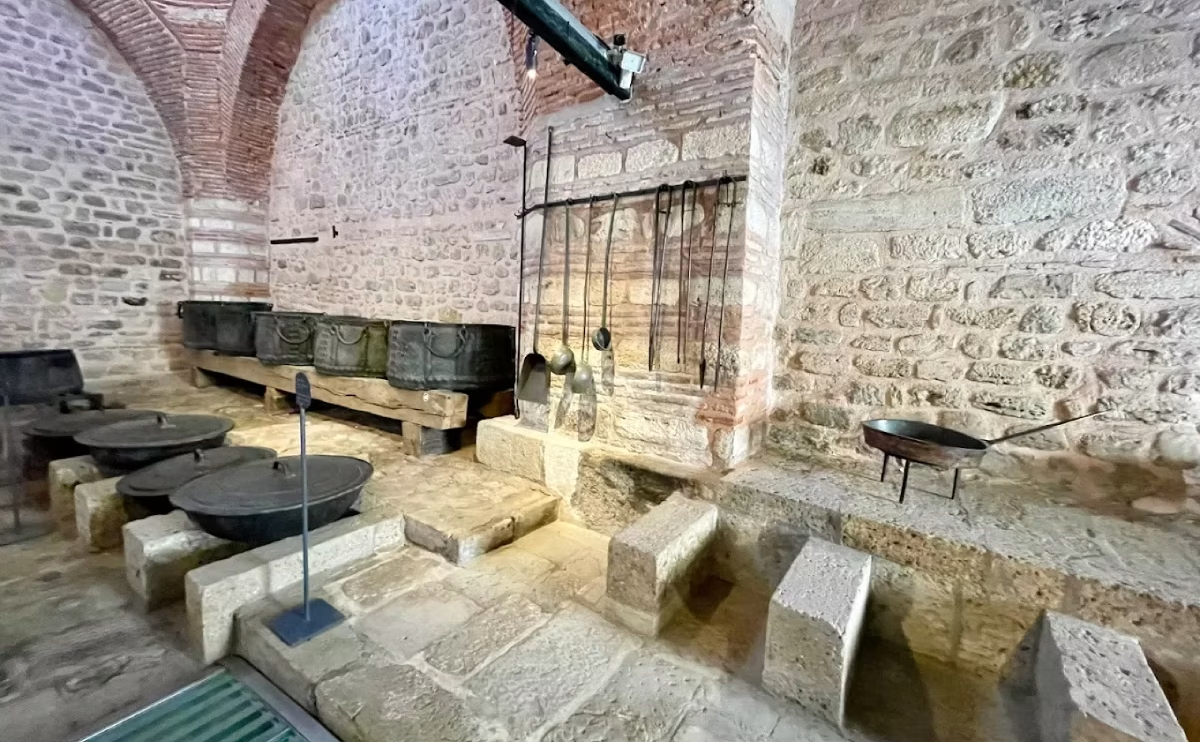
The Palace Kitchens at Topkapi Palace

The Palace Kitchens occupy the entire right side of the Second Courtyard and now house an extraordinary collection of Chinese, Japanese, and European porcelain alongside Ottoman silverware and cooking implements. They were recently renovated with major galleries reopening in 2024. Allow 25–35 minutes. Entry is included in the standard palace ticket.
The Palace Kitchens of Topkapi are one of the most underrated sections of the complex. Most visitors pass the long domed range of buildings on the right side of the Second Courtyard on their way to the Harem or the Third Courtyard, giving them a cursory glance before moving on. This is a mistake. The kitchens house one of the finest collections of Chinese porcelain outside China, a world-class Japanese ceramics collection, and Ottoman silverware of extraordinary craftsmanship — a museum-quality collection that would be a headline attraction in any standalone institution.
History of the Palace Kitchens
At their operational peak in the 16th and 17th centuries, the Topkapi kitchens fed up to 5,000 people daily — the sultan and his immediate household, the Harem, the Janissary corps stationed at the palace, the administrative officials of the Divan, visiting dignitaries, and the thousands of servants and workers who maintained the complex. The kitchen complex comprised ten separate domed halls, each specialising in a different category of food: confectionery, beverages, the sultan’s personal food, the Harem’s meals, and the meals of the various palace departments.
The culinary culture of the Ottoman palace was extraordinarily sophisticated — Ottoman court cuisine is the ancestor of what is today recognised as Turkish cuisine, and the palace kitchen’s recipes, techniques, and flavour combinations filtered out into the wider Ottoman world over the centuries. The palace kitchens operated continuously from the 15th century until 1909, when the court transferred to Dolmabahçe and Yıldız palaces.
The buildings were converted into museum galleries in the 20th century, and a major renovation completed in 2024 has reopened several previously closed sections with improved display facilities for the porcelain collection.
The Porcelain Collection
The Ottoman sultans were passionate collectors of Chinese porcelain — a taste that began in earnest with Sultan Selim I’s conquest of the Mamluk Sultanate in 1517, which brought large quantities of Chinese celadon into the palace collection. The collection grew through diplomatic gifts from China, trade acquisition, and the spoils of military campaigns across three continents.
Today the Topkapi porcelain collection numbers over 10,000 pieces — the third largest collection of Chinese porcelain in the world after the Palace Museum in Beijing and the National Palace Museum in Taipei. It spans from the 13th to the 19th century and covers virtually every major period and style of Chinese ceramic production.
Chinese Celadon — The Ottoman palace had a particular fondness for Chinese celadon — the grey-green glazed stoneware prized across the Islamic world for its supposed ability to change colour or shatter if it came into contact with poisoned food. The Topkapi collection contains some of the finest examples of Song, Yuan, and Ming dynasty celadon, including pieces that have never left the palace since arriving as diplomatic gifts five or six centuries ago.
Blue-and-White Porcelain — The collection includes outstanding examples of Yuan and Ming dynasty blue-and-white porcelain, including large dishes and ewers that were used at the Ottoman court table alongside the palace’s own silverware. Some of the blue-and-white pieces in the Topkapi collection directly influenced the development of Iznik pottery — the Ottoman craftsmen who produced the magnificent tiles of the Harem and the great mosques drew on Chinese blue-and-white as a direct artistic model.
Japanese Porcelain — A significant collection of Japanese porcelain — primarily Imari ware from the Arita kilns — was added to the palace collection in the 17th and 18th centuries, reflecting the Ottoman court’s increasingly global artistic horizons.
European Porcelain — The 18th and 19th century galleries contain Meissen, Sèvres, and other European porcelain received as diplomatic gifts from European courts, reflecting the growing cultural exchange between the Ottoman Empire and Europe in this period.
The Ottoman Silverware Collection
Alongside the porcelain, the kitchens house an important collection of Ottoman court silverware — serving dishes, ewers, trays, candlesticks, and functional implements used at the palace table. The scale and quality of the silverware collection reflects the extraordinary logistical complexity of feeding and serving a court of thousands — the palace maintained its own silversmiths and coppersmiths who produced and repaired utensils continuously.
Visitor Tips
Don’t skip the kitchens. Most visitors walk past the kitchen buildings focused on reaching the Harem. The collection inside is genuinely world-class and adds important context to the overall palace experience — the porcelain collection in particular tells a story about the Ottoman Empire’s global connections and aesthetic sophistication that the Treasury and the Harem, for all their splendour, do not.
Visit after the Harem. The kitchens are best visited after the Harem and on the way to the Gate of Felicity leading to the Third Courtyard. This order follows the natural flow through the Second Courtyard and ensures you do not run out of time before seeing the Harem and Treasury.
Check what is open. The 2024 renovation has reopened previously closed sections — confirm on arrival which galleries are currently accessible, as renovation work at the palace is ongoing.
Time needed: 25–35 minutes for a thorough visit to the open galleries.
Frequently Asked Questions
What is in the Topkapi Palace Kitchens now?
The kitchens now house the palace’s porcelain and silverware collections — including Chinese celadon, blue-and-white porcelain, Japanese Imari ware, European porcelain, and Ottoman silverware. The actual cooking equipment and some original kitchen furniture are also displayed.
Is the porcelain collection at Topkapi worth seeing?
Yes — it is one of the three largest collections of Chinese porcelain in the world and contains pieces of exceptional quality and historical significance. For visitors interested in ceramic arts, Asian history, or the global connections of the Ottoman Empire, it is one of the most rewarding sections of the palace.
Were the kitchens recently renovated?
Yes. Major renovation work on the palace kitchens was completed in 2024, reopening previously closed galleries and improving the display of the porcelain collection. The renovated sections are worth seeing even for repeat visitors.
