
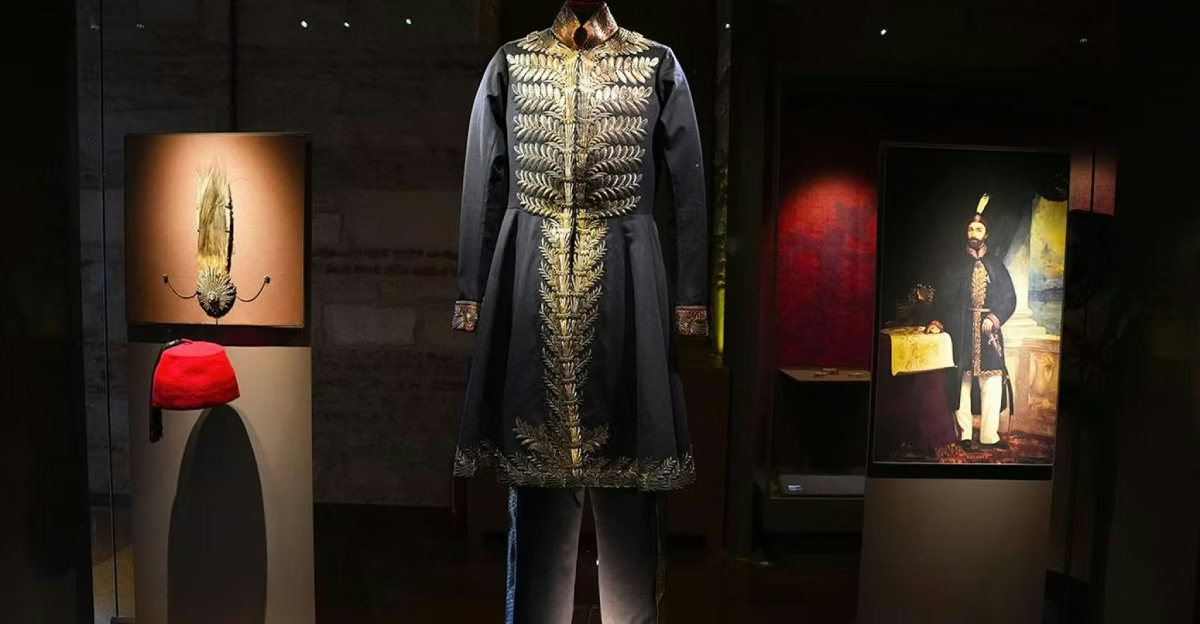
Imperial Collections: Miniatures, Manuscripts & Robes at Topkapi Palace

The Imperial Collections in the Third Courtyard include Ottoman miniature paintings, Quran manuscripts, calligraphic works, and the Imperial Wardrobe — a unique collection of caftans and robes worn by the Ottoman sultans across five centuries. These galleries are less crowded than the Treasury and Harem and reward visitors with a genuine interest in Ottoman art and material culture. Entry is included in the standard palace ticket.
Beyond the headline attractions of the Imperial Treasury and the Harem, Topkapi Palace contains a series of galleries in the Third Courtyard that are among the finest collections of Ottoman artistic and material culture anywhere in the world. The miniature painting collection, the manuscript and calligraphy galleries, and the Imperial Wardrobe — housing the actual clothing of the Ottoman sultans — constitute a comprehensive record of five centuries of Ottoman court culture at its most refined.
These galleries tend to be quieter than the Treasury and Harem, which makes them particularly rewarding for visitors who want to look closely and think carefully. They are the sections most transformed by a knowledgeable guide or audio commentary, as the objects require context to fully appreciate.
Ottoman Miniature Paintings
The Topkapi Palace miniature painting collection is the largest and most important in the world — a comprehensive record of the Ottoman imperial painting tradition from the 15th to the 19th century. Ottoman miniature painting was a court art produced by the palace workshops (the Ehl-i Hiref) under the direction of the court’s chief painter (nakkaşbaşı), and its subject matter was almost exclusively the life of the palace — the sultan’s campaigns, his court ceremonies, his entertainments, and the natural world as observed from within the palace gardens.
The collection contains both individual miniatures and illustrated manuscripts — the latter including the extraordinary Surnama-i Hümayun (Book of the Imperial Festival), a record of the 1582 festival celebrating the circumcision of Sultan Murad III’s son, which is illustrated with hundreds of miniatures depicting the processions, entertainments, and guild displays that took place over 52 days in the Hippodrome. The Surname is one of the most comprehensive pictorial records of Ottoman social life in existence.
Other highlights include the Hünername — a two-volume illustrated chronicle of the reigns of the early sultans — and the Seyyid Lokman’s illustrated history of the Ottoman dynasty, both featuring miniatures of extraordinary quality and historical value.
Quran Manuscripts & Calligraphic Works
The palace library collection — now displayed in the Third Courtyard galleries — contains one of the finest collections of Quran manuscripts in the world, spanning from the earliest centuries of Islam to the 19th century. The collection includes manuscripts attributed to some of the most celebrated calligraphers in Islamic history, including examples of the six classical scripts — thuluth, naskh, muhaqqaq, rayhani, tawqi, and riqa — as well as the Ottoman court’s own preferred scripts.
Calligraphy — the art of beautiful writing — held a position in Ottoman court culture comparable to painting in European court culture. The palace employed master calligraphers (hattat) whose work was collected, gifted, and preserved as objects of aesthetic and spiritual value. The Topkapi calligraphy collection documents this tradition from its beginnings to its fullest flowering.
The collection also includes illustrated scientific manuscripts — astronomical texts, medical treatises, geographical works — that reflect the Ottoman court’s engagement with the intellectual traditions of the Islamic world and, from the 17th century onwards, Europe.
The Imperial Wardrobe (Padişah Elbiseleri)
The Imperial Wardrobe is one of the most unusual collections in any major museum — a near-complete archive of the actual garments worn by the Ottoman sultans across five centuries, from Mehmed II (r.1444–1481) to the final sultans of the 19th century. The collection contains over 2,500 caftans, robes, trousers, shirts, and accessories, making it the largest surviving collection of royal clothing from the medieval and early modern periods anywhere in the world.
Ottoman court dress was highly codified — colour, fabric, cut, and decoration all carried specific meanings and were regulated by the court according to the wearer’s rank and the occasion. The sultan’s caftans were the most elaborate, made from the finest silks, velvets, and brocades woven in the palace workshops or imported from Venice, Genoa, and Persia. Many are decorated with extensive embroidery in gold and silver thread.
The wardrobe collection is remarkable not only for its artistic quality but for what it reveals about individual sultans — the physical dimensions of each garment, the choices of colour and decoration, and the condition of the clothes all contribute to a surprisingly intimate portrait of the men who wore them. The caftan of Sultan Suleiman the Magnificent — a large man by the evidence of his clothing — is one of the most personally evocative objects in the palace.
Visitor Tips
These galleries are less crowded than the Treasury. Visitors who rush to the Treasury and Harem frequently bypass the miniature and manuscript galleries. This means that when you visit, you will often have these remarkable collections largely to yourself — a striking contrast to the bustle of the fourth Treasury room.
Audio guide is particularly valuable here. The miniature paintings and manuscripts require contextual knowledge to fully appreciate — understanding what event a miniature depicts, who the calligrapher was, or what court occasion a caftan was made for transforms objects that might otherwise seem merely decorative into windows into a specific historical moment. The audio guide app covers the key pieces; a live guided tour provides the deepest context.
Time needed: 20–30 minutes for a focused visit to the highlights. 45 minutes for a thorough exploration of all open galleries.
Frequently Asked Questions
What is Ottoman miniature painting?
Ottoman miniature painting is a court art tradition produced by the palace workshops from the 15th to the 19th century. Unlike European painting, it is not interested in perspective or the illusion of three-dimensional space — instead it presents events in a flattened, richly coloured style that emphasises pattern, hierarchy, and narrative clarity. The subject matter is almost exclusively the life of the palace and the empire.
Why does the Ottoman Imperial Wardrobe still exist?
Ottoman court practice required that the personal effects of a deceased sultan — including his clothing — be carefully preserved rather than repurposed or destroyed. This practice of preservation across five centuries means that Topkapi Palace holds a uniquely complete record of royal dress. Many European royal courts of the same period have far fewer surviving garments.
Are the Imperial Collections open to visitors?
Yes, the main galleries are open as part of the standard palace visit. Some specialised storage areas are not accessible to the public. Check current gallery opening status on arrival, as specific rooms may be temporarily closed for restoration.
